Tuesday, October 25, 2011

Tortilla Soup


The end of the season tomatoes are ripening in numbers to great for just fresh eating, so it was time to get out the soup kettle and make some tortilla soup.  I first had this dish at a neighborhood pot luck and loved the simple deliciousness of this soup.  On a grocery shopping trip, I ran into the neighbor who made it and she was there to buy the ingredients to make a large kettle for her daughter who was flying in from California.  Priscilla and I walked through the store as she put all the ingredients in her cart, while I wrote each one down on the back of my list.  By the time we were done, I had a memorable shopping trip and a new recipe.
We have made the soup many times since and have varied it only slightly depending on what is actually in the house when I make it.  When someone is under the weather, we call it the healing soup since it has so many tomatoes in it.  The recipe calls for canned tomatoes, but I will use fresh tomatoes that I blanch and peel before dicing and use slightly less water than I would add with canned.

Tortilla Soup

2   28 oz each canned tomatoes
water each can filled once
4-5 sprigs of cilantro, chopped
1/2 teaspoon cumin
2-3 cloves of garlic, diced fine
1 jalepeno pepper seeded and diced
3 chicken bouillon cubes or equivalent of powdered
2-3 raw, boneless, skinless chicken breasts, cubed
1 pound frozen corn
Shredded cheddar cheese
corn tortilla chips
lime wedges


Cut up tomatoes to a medium diced size (1/2" or so).  Add to kettle with water, cilantro, cumin, garlic, jalepeno, bouillion, and chicken.  Cook over medium-high heat until it comes to a boil, then reduce to a simmer for at least one hour.  I make this in the slow cooker and will let it go all day on low or 3-4 hours on high.  Add frozen corn and heat thoroughly.  Add additional spices to taste.  Serve with cheese and tortilla chip sprinkle on top with a lime wedge squeezed in as well.  Make about 5 quarts of soup.


If you have leftovers and can't eat them all, this soup freezes well.  Do it in serving size portions to put in a lunchbox or a quick dinner instead of fast food.  Enjoy the recipe as much as we have.

Friday, October 21, 2011

Season's End


With the days now shorter than our nights, we are still trying to stretch out the time with our yard lights to get our gardens to bed for the winter.  I was out in my own yard working and could hear the swish of the rake next door.  Gardeners do not give up easily.  
I picked my tomato plants clean before the cold rains of autumn came this past week.  I lay them in garden flats lined on the bottom with newspaper and the green ones will get a layer on top as well to help them ripen indoors.  These were brought in about a week before the picture was taken and there were only some blush colored tomatoes at that time.  You can see that they will continue to ripen indoors.  That is how you get your tomatoes at the market.  They are not red, ripe beauties before they are shipped.  The newspaper helps protect the fruit from bruising and adding a sheet on top helps keep the ethylene gas around the fruit to help them ripen.  I can now can, freeze, eat, or share from my basement stores.
 I finished moving in the plants I plan on overwintering indoors and made the last of the cuttings off the plants that I will let freeze in the ground.  The time has come to bring in the canna tubers, begonia bulbs, and all other corms that you have to keep indoors until next spring.  My neighbor who was out raking, will pull out her geraniums and put them right into brown paper bags until repotting them next spring.  If you do bring plants indoors, remember to keep them isolated for at least a week to keep the rest of the indoor plants pest free.  


I also enjoy the last of the cut flowers from my garden by bringing in the best blooms in vases.  I love the combination of unusual flowers that brighten a corner of the room during our dark nights.
There are those hardier plants, such as flowering kale and mums which we can enjoy a little longer.  I grew this kale from seed from Pine Tree Gardens this year.  I kept it in pots so I could move it into the garden this fall, but couldn't figure out what I was doing wrong because it looked nothing like the flowering kale I am used to seeing.  It wasn't until I was looking at a friend's Facebook pictures of her vacation and saw kale in a farm market that looked similar that I remembered my kale is a cut-flower variety that looks similar to a rose.  I immediately went out and dumped my drooping caladium out of its urn (and took inside for winter storage).  I layered all the potted kale into the urn until all 18 plants made a living bouquet for my front entry.  I expect it to last for a good long while into the cold.
After trudging around in the cold and rain to do your last minute gardening, take a hot bath, and curl up with a hot drink and a good book...about gardening, of course!

Sunday, October 16, 2011

My favorite plants 2011

As a gardener who also spent 20 years working in a greenhouse, I have some favorites that I have grown for many years.  I also have some new favorites each and every year because I can't stay away from the garden centers. I love to check out the new developments as well as discover some  plants that have been around for awhile but are just getting recognized for their simple beauty all over again.  This is a collection of the plants that I really enjoyed in my garden this year.


Lisianthus and heliotrope were paired in a pot with the new petunia on the scene, Pinstripe.  The Pinstripe was beautiful for the first half of summer and then fizzled in the heat.  The lisianthus and heliotrope I found in 4 packs at my favorite local garden shop, Luxembourg Greenhouses, and they started off slow because of their size, but soon grew into a beautiful plant and with the heliotrope, wonderfully scented.  The lesson here is instant gratification is not always what is is cracked up to be.  I spent more on the one petunia, which I did enjoy while it lasted then I did on the eight other plants which were no where near bloom when I purchased them.


I was also fortunate to find Merlin Blue petunias in the 4 packs of which I bought two for the front entry.  They took off and provided the best scent I have ever had at my front entry.  It was like the lilacs did not stop blooming this year.  They also performed great most of the summer but were over-run with the alysum that I directed seeded with them as well as the heat and drought.  Since the alysum still looks good and also has a nice scent I am alright with the loss.  The direct seed was definitely the right move rather than plant purchase for them.  Try that one for yourself.


Nasturtiums have been in my garden for years.  I have tried many varieties and hands-down my true favorite is Whirlybird.  The plants mound nicely, are prolific bloomers, and can be started easily from seed.  The flowers are edible as well as the newly formed seed pods which are a substitute for capers.  See the blog on edible flowers for more information.


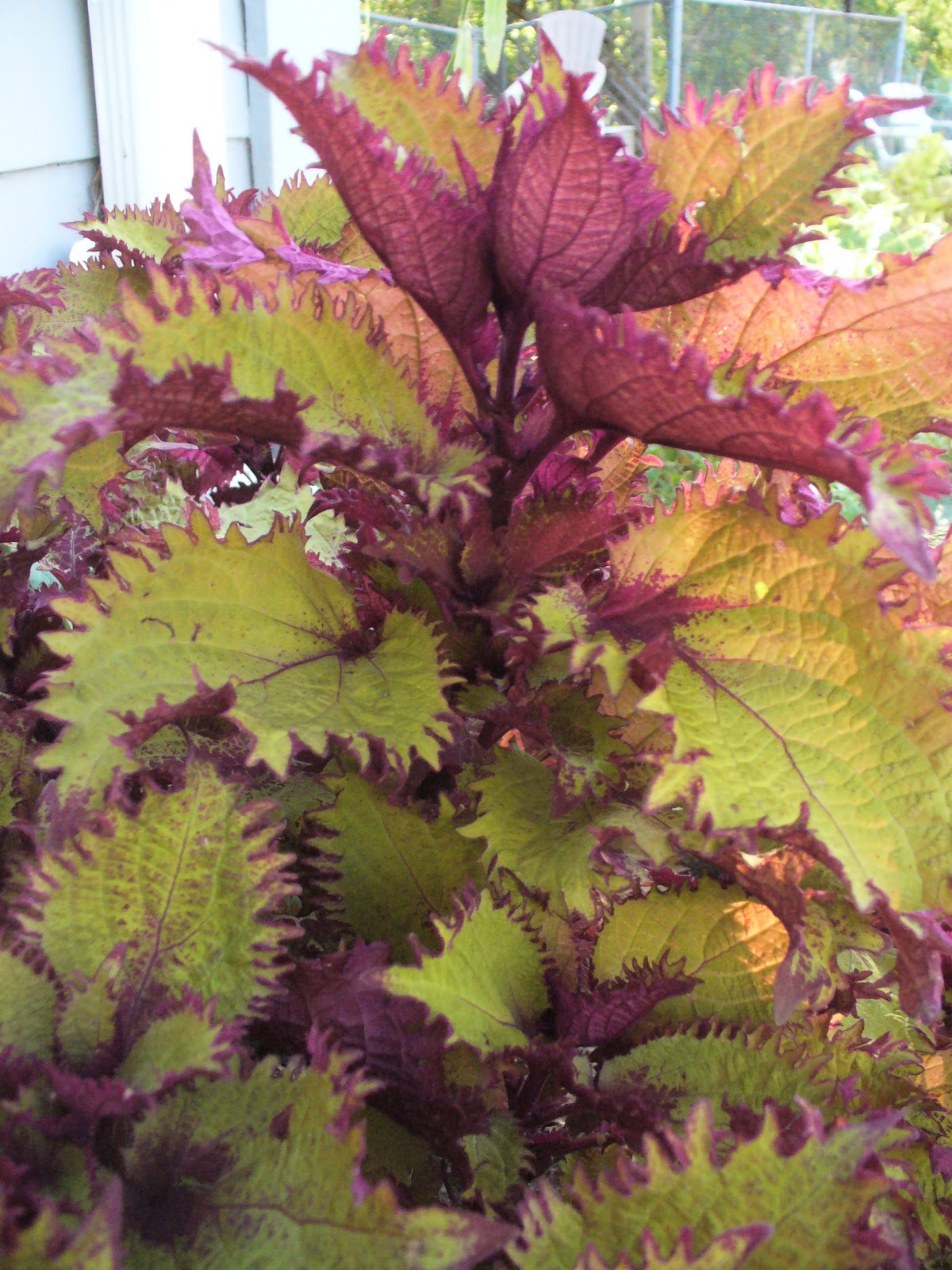
Coleus are a staple plant in my yard.  The foliage comes in so many colors and textures to please just about anyone.  Pictured here is one of the newer varieties, Henna.  Henna is nice with its bi-colored foliage, yellow-green on top and purplish on the lower.  The fringed foliage is also nice for texture in the landscape.  The leaves really show off their color when they are blowing in the breeze.  My other all-time favorite is Alabama Sunset.  The leaves vary in color from the center and leaf base out just like a sunset in colors of yellow, orange and pink.  Coleus are not affected adversely by high nitrogen like most flowers because the foliage is its main feature.


Alpine strawberries came into my garden last year when a co-worker started some seeds and had great success with germination.  He shared his bounty with the rest of us.  The plants were so tiny to start, I found it hard to believe they would actually become anything.  I moved the starts from cell packs into plastic window boxes.  I enjoy the few berries as they come right in the garden (there is a total of 16 plants in two boxes each 3' long).  I put the boxes directly into the soil for winter and pulled them out in the spring.  They were kept close to the garden hose for watering.  The berries are small and you must wait for them to be totally red for the best sweetness.  The fall berries have been the best tasting bites I have ever had.  The concentrated flavor and sweetness is worth the small harvest.  My daughter, Elizabeth, has enjoyed them most of the summer as they produce all season long.  I think they are worth looking into for their unique qualities.


If you have been reading my blog at all you KNOW tomatoes are on my list this year.  The small yellow Sungolds are the sweetest cherry tomato you will ever enjoy.  Wait for it to get to its orange-yellow stage for the best flavor.  Picking a few off the vine on my way in the door after work was a treat.  A bowl on the corner of my desk never saw the end of the work day with everyone stopping for a few.  The round Celebrity tomato is great for a full-size tomato.  An All-American Selection winner has great flavor with disease resistance.  The Roma rounds out my garden in the paste tomato category for reliability.


Beer-lover's edamame was a great producer this year.  I had enough to share and freeze.  If you can't find the seed (I got mine through Pinetree Gardens in Maine) edamame is also available in the freezer at the grocery store.  I will say no more as I dedicated a whole blog to the wonders of they humble soy bean already.
Who needs any more reason to enjoy a beer at the end of the day?


Purple trifiono pole beans have been in my garden for years.  I like pole beans as they take up very little space and produce for a long time.  They are still setting a few beans even with the cool, short days.  They were the last thing I gave my dog, Jake, before our last trip to the vet as they were also his favorite.  The purple beans make picking them easier as they do not blend in with the leaves like green beans do.  Pole beans, in general, sell out earlier so I make sure my order gets in with these on the list.


This pot had three lovelies in it this year that are all worth mention.  The coral calibracoa is still in bloom (left side of pot).  On the right side of the pot is lantana with a bi-color bloom.  I plucked the plant out of the pot and brought it in the house for winter as the color was so unique and it performed wonderfully without much dead-heading.  The pink star-shaped flower in front is an ivy geranium which I have been propagating for a long time just to keep it in my garden pots.  The heat and drought have no effect on this reliable plant.  It also attracts hummingbirds to the backyard more than the hummingbird feeder does.


I will end my list of favorite plants with the Baby Tut papyrus that I enjoyed so much.  I had a King Tut last year that no matter what I did, kept blowing over and the stems would bend in the wind.  Baby Tut fit my smaller water feature better and was much sturdier.  It took a wild wind to blow it over and the stems stayed strong.  It was worth the money spent. I have decided to not try and over-winter this one and find it at the garden shop again next year.  I have to have some reason to shop for plants, don't I?


***I apologize if there are misspellings on plant names in this post.  Going out in the dark to verify all the spellings was not all that appealing.

Wednesday, October 12, 2011

The Farm Market


There are some people who love to shop.  It might be the mall or a big box store for them.  For me it is the farm market.  I love the sights, the smells, and the sounds of the market on a Saturday afternoon.
The West Allis Farmer's Market  has been around since 1919.  I have attended this market since moving to the south end of Milwaukee for 20 years.  It has evolved and change very little.  It got a face lift a few years ago, but much of it has remained unchanged.  It is open three days a week, Saturday being the most popular.  Everything is fresh, seasonal, and grown locally.  The venders are a cooperative which set their prices to ensure that the market remains competitive in quality, but allows the venders to make a profit at a fair market price.  The farmers are friends to each other and know what each offers.  What they don't have at their booth, they are willing to tell you where you might find it.
It is an open air market, so if it rains, you may get wet.  The farmers raise what they sell.  With little exception, most of the farmers grow within a short distance of Milwaukee County.  There are some that come in such as the woman with a cart outside the market with Michigan blueberries and peaches.  


It is not the kind of market that appeals to those who like to be seen, but those who are interested in getting good produce. The trucks line the inner aisles and load up the benches from the front.  The "remodel" of the market made breaks down the center so you could hop the rows easier.  There has been an influx of ready-made food venders and some meat and dairy options which vary from year to year.  There is also honey and maple syrup to be found on a regular basis.


The best part about the market is that the market opens at mid-day rather than morning.  Farmers bring their freshest picked produce that changes with the season.  It is a great time to teach kids about the seasonality of produce.  Watermelons in winter are not normal, or even in June.  You have to wait for late summer to get the best melons.  Greens and asparagus are the first offerings of spring, followed by peas, rhubarb, and radishes.  You can see where this is going, I hope.  In order for us to have these things other than when they are ready locally, they have to be shipped long distances over time.  Fresh produce out of season is not fresh produce.

Another great thing about the farm market is the ability to really interact with the people who grow the food you are about to buy.  So many of the farmers are willing to share tips with novice gardeners.  They also are willing to answer you questions about how to prepare things, what else is coming in to season soon, and how much longer some items will be available.  If you aren't sure what an apple is like, many farmers will offer you some suggestions and hand you an apple to try, FREE!  Try that at your local grocery and see how it goes over with the produce manager.

There is a so many things to see and smell.  It is a wonderful combination that make me smile just to be there.  Find your local farm market and go.  It isn't just about buying food, it is about being a part of a community.

Herman Comfort the singing corn salesman

The man who sings to you when you buy your corn, and the man who gives the rest of his away at the end of the day.  That is the kind of community I want to be a part of!


Wednesday, October 5, 2011

Jake-A Tribute to my Gardening Companion


Most people don't think of their dogs as gardening companions, but mine most certainly was.  He followed me wherever I was working and would watch the world go by until I moved on to the next spot.  My profile picture even includes him as he stayed by me while I lifted every rock in the wall into place.  He would stand outside the vegetable garden and wait to see if the green beans were big enough so he could get one of his favorite treats.
Jake was a great dog.  I know, everyone says that about their dog but he truly was.  He loved people.  On our walks we got to know lots of other dogs and their owners.  Jake always greeted the owner first before the customary sniffing began.  We live next to the park so he got to see lots of people and dogs go by.  We would hear voices call out his name from the other side of the fence in greeting.  The regular, non-dog owner, walkers also knew him.  Several carried treats in their pockets which endeared them to him even more.  It didn't take treats for him to like you though.  He was just as happy to have a scratch under the chin or a stroke down his back.  
He was an obedient dog who's vocabulary would astound most people.  He didn't speak it but he knew what you were saying beyond the simple, "Sit, stay, down, etc.".  We became friends with a neighborhood gardener who had no dog of his own but looked forward to our visits.  He kept treats in the cupboard just for Jake and a dish with "Jake" on the side sits on his porch for water.  I could let Jake off the leash and tell him, "Go find Stan" and off he would run to the back yard or garage until Stan would follow him out to the front yard.  We joked that he was a Stanley-retriever.
Jake in-fact was a Goldendoodle.  We got him 11 and 1/2 years ago when no one knew what the cross between a Standard Poodle and Golden Retriever would bring.  He was $300 and we thought that a pretty price for a mixed-breed.  He was worth every penny and then some.  Ask people now what they get for this fine mix of temperament and low-shed coat.  He fit in so well with our family.  The girls were able to establish their dominance over him in our pack and he learned the dos and don'ts of living in our house.  He border-trained so well that even with the back gate open, he would stand and bark at passing dogs from the invisible barrier of the back yard.  He never mastered dropping the ball during a game of fetch, so two tennis balls always were part of the game.  He didn't like swimming but would lay on the floating mats and enjoy the cool water from there.


Time goes quickly and we all have gotten older, but not as quickly as a dog does.  He still had that puppy about him but he slowed down and lost his stamina.  Our walks got shorter and slower.  Kidney problems started this spring and our 53 pound pup lost weight until he was last weighed in at 41.  I came home from work early this afternoon so I could be with him.  We took our last walk down to the vegetable garden where I found a few small, October beans for his last treat which he enjoyed as much as any other. So, on a very fine autumn day, we took our last drive to the vet with him.  I cried (I am crying) as he laid his head down for the last time.  The vet cried with us.  When Jake comes home, he will be laid to rest under the tree that I planted first in our backyard and was his favorite spot to be in.  I will always look to that spot and remember the greatest dog in the world.


Thursday, September 15, 2011

FROST!

The dreaded word of gardeners has entered our weather forecast...frost!  We gardeners scurry around in the garden working to save our precious plants and bring in the last of the cold sensitive harvest.  When I heard of the cold front yesterday morning, I made it my goal to bring in all the red, almost red, and just blushing tomatoes.  They never store as well after they get cold and I am determined to make the most of my great tomato crop.
The plants still have plenty of green tomatoes that are of a decent size that I am going to gamble on better weather coming.  We often get one or two cold nights followed by a beautiful stretch of weather.  I have pulled out the new bag of floating row cover and have encased the tomato patch like a caterpillar in its cocoon.  With the southern exposure and radiant heat from the house and pavement, I am hoping it is enough to extend my crop this year.  If the real cold comes, I will pull off the rest of the green tomatoes and store them in single layers on newspaper in the basement.  I have had tomatoes ripen well into winter using this technique.  Not as good as vine ripened but no worse than what you would buy in the store.


A few other things had to be adjusted for the possible lows in the 30's tonight.  I have several plants that I have over-wintered and would like to do again.  I have two citronella scented geraniums that I grew into topiaries now each 4 feet tall.  My star jasmine and mandevilla vine are also too expensive to replace now that they have grown larger.  I also bring in coleus cuttings for my garden next year.
Basil is cold sensitive even without frost and should be harvested before the cold hits.  Since it is cold sensitive, never store it in the refrigerator.  Cut the plants and stick them right in water.  I have some larger plants which I am going to dehydrate the leaves for dried herb use.  I have some that have already rooted on the window sill.  There are a few left in the garden under frost cover and one bunch which I late seeded directly in the garden which I just put an over-turned pail on to keep warm.  A very simple solution, I do have to take it off in the morning.
Just a few notes about frost protection.  Plastic sheets are not a good option.  If the plastic rest on the plant leaves they will freeze through the plastic.  Cloth is a better option, row cover is great as you can leave it on the next day rather than have to remove it like you would with sheets or rugs as they block too much light.  If you have the time to take things off before the sun is too high then they work just fine.  If you don't cover and get caught by a frost there is one last option to resort to which does work.  The reason why frost kills plants is that as the frozen cells warm up with the sun they burst from warming too quickly.  If you get out before sun up and water by sprinkling the leaves, you more slowly warm up the plant cells and may just save your plants for another day.  
Welcome to gardening via the extended season!  Whatever it is you cherish you may find a place in your home to keep it over winter.  It is always a good idea to wash plants off thoroughly before bringing in and isolate them from your other house plants for the first couple weeks to see if any bugs hatch.  This year I plan on immersing my pots in a tub to make sure I do not bring another mouse family in with them like last year (four baby mice eating my new seedlings was not good).  I keep all my indoor plants in my basement under lights for the winter and they pull through just fine.  It also makes doing laundry a bit more tropical in the middle of winter.  Stay warm and put the pots in the garage for the night.  Indian Summer is on its way.

Tuesday, September 13, 2011

Herb Garden

 I used to think of herbs as the extra things in the garden which I could live without if it meant using space I wanted for other things.  All that changed several years ago when I added a small water feature to the backyard.  At first I had flowers planted in the space, some perennials and annuals, with the nasturtiums trailing down the wall.  I think it was the nasturtiums and their edible nature that caused this long time flower spot to become an edible and "scentual" garden.  
The herbs had been right outside my back door by the kitchen.  It was a great spot and I often ran out while cooking to nip off fresh herbs for my dishes.  Slowly the shade trees got bigger and the herbs grew smaller and some of them displaced the perennials in the rock wall bed.  This year all the herbs have moved in and not one flower grows there.  The plants grow great here.  Not quite full sun but a good amount of afternoon light makes it through the light shade of the crab apple tree.  

The sound of running water makes it a beautiful place to be in my yard.  Most of the herbs are in the ground, but the rosemary tree which is not winter hardy remains in a pot for easy conveyance to the house in colder weather.   Basil cuttings that I root in water are already waiting to be transplanted for the winter window sill garden. Most of my herbs are for cooking but some are there just for the pure pleasure of crushing their leaves for the scent they give off, such as my lemon verbena that I purchase each spring as it is also not winter hardy and I haven't had much luck rooting it.  I like to go to the garden center in spring so I leave it to more capable hands.  The smaller garden centers around Milwaukee have some very nice people who own and operate them and I look forward to seeing them again each season.  I would hate to lose these wonderful spots to the big box store that carry poor merchandise and don't know their plant from a hole in the ground.
I started making spring and early summer the choice time for harvesting many of my perennial herbs.  Chives are definitely best in the early spring as are thyme and oregano.  The leaves are still fresh and packed with flavor. By the fall, many plants are tough and chewed up.  Since I am eager to be out there picking something, herbs are what make it in.  I dehydrate most of my herbs in an American Harvester food dehydrator which I built on to and have owned for over 20 years.  It still runs like a champ.  I have 8 trays but it could hold up to 12.  I have never run out of space with what I have.  I crush and store in plastic bags and dispose of last years herbs once the new ones are in. I usually don't throw out much as I dry mostly what I need for the year and enjoy the rest fresh.
The herb garden was great while making spaghetti sauce this weekend.  I was able to use fresh oregano, basil, and rosemary as well as the garlic that came out of the garden this summer.  I also picked my own onions for the sauce.
Whether you grow herbs for cooking or just enjoying is up to you.  There is the whole area of medicinal herbs that I haven't even touched on because it is so extensive.  Start simply by walking through the herb section of the garden center.  Touch the leaves, read the tags, and ask questions.  If you go to the smaller greenhouses, the staff has usually chosen the seeds and plants and have nurtured them from little on and can answer your questions.  Get a good herb book and read to get some ideas of what you like.  Look at your favorite cook books to see what herbs are popularly used in recipes.  As you educate yourself more and more, you will become better at gardening and using what you grow.