Saturday, May 23, 2015

Garden goings on

In between all the big work of the nursery and greenhouse, I snatch moments in my own garden life.  I don't do marathon gardening sessions like I used to.  Even less now.  Here is my list of garden jobs you can do in small snatches of time and still enjoy gardening on your terms:

  • Weeding.  You don't have to do the whole garden all at once.  If you have to pick and choose, get the ones that are starting to flower first.  Get a small hand cultivator (single hook for small spaces is my choice) and work small patches.  Something is better than nothing.
  • Watering.  Most plants are better off allowing to dry in between watering.  Concentrate on containers first and do it in sections so you aren't out there for hours.  Consider soaker hoses and drip lines where it makes sense.  Turn it on and have a beer.
  • Planting.  It doesn't have to get done all at once.  Prep an area and plant.  Have another beer.  Prep another area and plant.  Do a little each day, don't save it all for the weekend.  A hidden reward in planting over time, especially with edible crops, is your garden keeps producing all summer long.  The one caveat is to watch the days to maturity on your seed packets.  Don't wait too long on those long season crops or you will be disappointed.  Space out greens, herbs, and short season root crops for extended harvest.
  • Harvesting.  My favorite thing in mid-summer is to take my morning coffee out to the garden early in the morning.  The neighbors are sleeping, but the birds are singing.  What better atmosphere can you ask for if you have some work to do?  Morning is also the best time to harvest many things since they are not wilted by the heat of the day.  Keep buckets or bags in a small deck box or even a plastic covered bin so they are always handy when you find yourself picking more than fits in your hooded sweatshirt.
  • Dead heading.  Yup, you really should pull, pinch, or snip off those spent flower heads.  Early in the season, this will keep your plants blooming better.  If you plan on collecting seed, then you should let some go later in the season so the seed can mature on the plant.  Keep a garden scissors or snips in the same box or hang it on a hook by the door.  If you don't have to look for your tools, you are more likely to do the job.  Purchase a couple so you can keep them close to different garden areas.  You can also enjoy a beer while doing this task.
  • Smelling the flowers.  Don't forget that the main reason you garden is for the beauty of it all.  Put chairs out where you can sit and enjoy the fruits of your labor.  I like to have sitting areas in the most unexpected places.  It is fun to look at things from various perspectives.  And have another beer.


Sunday, May 17, 2015

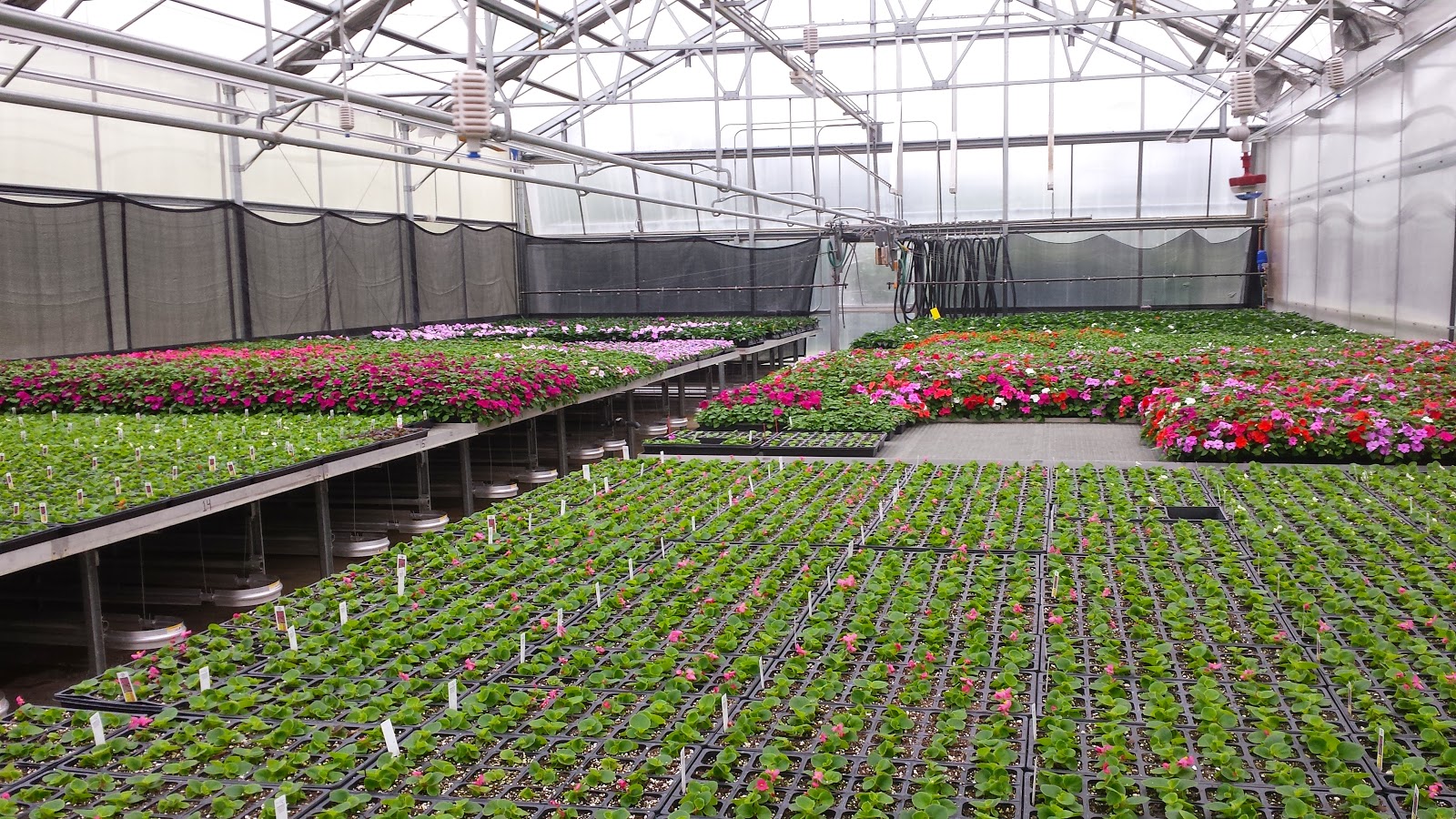
Full greenhouses, new pictures

Begonias and impatiens

Coleus on one end


marigolds on the other


A hodge podge of crops

Geraniums, dahlias, and others

Vinca and dahlias

Cape daisies, supertunias and ornamental peppers
 We are at that time of year when we are full or nearly so.  We had some early crops go out for plantings for the May graduation ceremonies.  We had the hardiest crops, petunia and dusty millers, out in the elements with just shade and frost cover when needed.  A few other items went to unheated hoop houses to acclimate them to the elements.  We have filled up the outside shade area again with similar crops to toughen them up and space out the larger wave petunias.  I need more shade cloth up as there are some other plants that would love to get outside to enjoy the weather.  
The extra heat from longer, sunny days has been to the benefit of many of the plants.  I have learned some things that I want to do differently.  I had some crops at two stages of maturity, I want to do a few more to get a jump on some of the earlier (pre-Memorial Day) orders.  This would allow us to harden off more crops so the customer's success increases.  I dream of building some benches that would bring our crops up and let us keep better control of weeds.  It would also double up the outdoor space with two tier possibilities.  It would be a fairly minor investment as well.  Every year there are new ideas to try and implement.  Time and money are the only limitations.

Sunday, May 3, 2015

PotAto, Potaato...however you say it, I'm growing them

I am happy to have the space to finally grow some of those crops there was never room for in my city lot.  I had to watch what I grew in my back yard as the black walnut was rough on most crops in the Solanacea family.  Peppers were my one exception for some reason.  Potatoes are in the same family and they take up plenty of room, especially if you really want to have more than just a meal or two.  I bought two bags of seed potatoes a couple weeks ago while out on a shopping run to Tractor Supply Co.  I chose Yukon Gold and Red Norlands.  I grew the reds before with success.  I kept them in a warm location with some light and got them to start sprouting as the package instructed.  That was the easy part.  
I had put a couple hills for my daughter at the old garden plot as they are looking a growing variety, not quantity.  She was given instructions to hill soil around the growing sprouts as they came up.  Potatoes grow sprouts from the eyes on their skins.  As the sprouts grow up, they flower and will grow potatoes at those points along the stem.  The grower must continue to put soil, mulch, straw or other type of growing media up the plant to keep the potatoes covered.  Failure to do so will cause them to turn green and that is what causes toxic buildup under the skin.  Don't eat the green part of a potato.
What I put in for her was small potatoes compared to what I was doing.  After counting up the tubers I had left, I was looking at 32 holes without cutting the potatoes apart.  I chose not  to cut the potatoes apart.  Remember how I said this garden has a seed bank that puts Fort Knox to shame?  I am not going to spend my summer hoeing the garden, so weed barrier will be my tool to combat excessive weed potential.  I pulled out my nearly full box of landscape fabric pin and utilized a piece of weed cloth that had cuts and slashes from a former job.  I found that the selected piece was EXACTLY the right length and width for my area after folding under the damaged areas.  I knew it was going to be a good day.  The forty year old me would have had the cloth down and potatoes in by lunch.  The fifty some year old me took most of the day.  I love to take a beer break, visit with my grown daughters, and make plans with my husband while in the middle of gardening season now.  My younger self would plow through and plant the entire yard in a weekend.  With age comes wisdom (and less endurance).
The fabric was laid over and area that was tilled last fall, but left as is this spring.  I used the weed dragon to burn some of the weeds and handed off to my younger daughter in Tom Sawyer fashion for a spell while on the phone with my older daughter.  Yes, with age comes wisdom.  I got a tape measure out to calculate the spacing between hills.  After setting the tape measure on the patio table, I carefully eyed the area and just put dots of paint where I thought I would make the cuts instead.  It worked much better than the OCD method I was going to enlist initally as well as much faster.
I cut an X in the fabric and tucked the triangles of fabric under the cloth to create a square planting area of one square foot, more or less.  I dug a plug of soil out, placed it on the side and then put a base of compost 1 to 2 inches deep in the place of the clay I removed.  I was encouraged to have found a few earthworms in the present soil as this has not been the case in past excavations.  My whole potato set went in the hole followed by more compost of another 3 to 4 inches.  The plug of soil will serve as back fill when the plants grow up and need to be hilled.  The process continued until all holes were created and filled with one potato set.
After several breaks for beer and conversation, all the holes were finally filled.  I had 32 sets of Yukon Gold and Red Norland Potatoes underground and ready to grow.  
I did one more task to make the job complete.  A trip around the grounds with the John Deere Gator and pitch fork cleaned up piles of winterizing straw and provided future cover for my future potato patch.  I was able to kill two birds with one stone for the mutual benefit of my garden beds.
Now for those cabbage plants hardened off on my porch...


Sunday, April 19, 2015

Starting over, my new garden


 The gardening venture begins anew in a different place.  My daughter and her husband will enjoy the fruits of my labor in the raised beds I left behind at the house we have owned for over 20 years.  I now get to garden in a much larger plot, but one that has been neglected.  One previous gardener used Roundup on a paint roller to "weed" the garden.  The second gardener, I have learned from second hand reports, put in plants and and did very little follow up.  I can believe the reports as I spent all of last summer just trying to clean up dead weed stalks only to find all the precious little babies they were sprouting underneath.  I resorted to the first gardeners technique and used herbicide to control the weeds, but did not plant.  It was tilled a couple times as the compaction was horrific and I expanded the bound with the herbicide to bring it up to the size it was when I I kept a small corner plot her over 20 years ago in the after work hours.
I have decided to not till again this spring to keep the covered weed seeds under the soil and deal with the ones that have and will sprout at the surface.  They are numerous!  I brought in some composted manure last fall which covered the smallest of areas.  This is where I will put my beds of seeds like spinach and such.  The other vine crops will get a mound of compost at their planting site with weed cloth or mulch around their growing area to try and suppress the potential weed army rallying forces underground.
I started this year off as I always do with peas.  The garden here tends to stay wet, so I have chosen to use the mounding method to create raised beds.  I loved my foot high, wood sided beds at home, but I am not going to invest in the materials or labor to do this here.  Starting with the area where the manure was spread last fall, I raked and mixed the soil a bit.  After getting it a bit loose, I pulled it up into a pile and then leveled off two rows for putting in my two different types of peas.  I like the sugar pods, but still enjoy the pleasure of shelling out peas as well.  They are starting off about six inches high, but will settle as the season goes on.  I will side dress these rows with carrots or other rooting crops to take over when the peas are done.  Right now the sprouting peas are covered with mesh to keep the squirrels and chipmunks from digging up and eating the peas as seeds.  I always soak my seeds first as the germination is so much better when I do.
I have to fence this garden much more heavily than I did in my urban plot.  The property is fenced off from the roaming deer herds for the nursery crops, but we still have four residential does that still call this home.  I put a hardware cloth and t-post fence around the perimeter of part of the garden that will keep the tastiest crops away from bunnies and wood chucks.  I am certain that I will have to do battle with something even still.

Next to each t-post is a ten foot conduit post pounded in about two feet.  I fashioned a hook for the top of each to hang a five foot wide mesh cloth that meets up to the three foot tall hardware cloth.  All together they form an eight foot tall enclosure which should keep the deer away from my peas, greens and bean crops.  The opening is an over-lap of the mesh with a gate of hardware cloth.  I have to duck to get through the mesh over-lap, but it is a small sacrifice.  Time will tell how effective this will be.  I did not dig the hardware cloth in very deep and this may be my weak spot if I don't monitor the perimeter enough.
Once my perimeter was secure (this was two separate weekends to accomplish) I felt I could continue with the actual gardening.  I used my Weed Dragon to scorch the weeds that were abundantly germinating already.  Next to the pea rows, I formed a square bed for my greens like spinach and lettuce as well as some root crops of parsnips and salsify.  Both root crops are over 100 days to maturity and are best harvested after frost for sweeter quality.  I have not added my kale yet, but need to make that a priority.  I have greenhouse starts of cabbage and bok choy to add as well.  I just hope the enclosure will fit them all!
I put the tender onion plants in as well.  I did two types of bulb onions, Ailsa Craig and Walla Walla.  I also have Lancelot leeks which I plan on mounding to blanch the stems as they grow.  These were also greenhouse starts back in February.  Onions and leeks are very long season crops when started from seed.  I have decided that the radicchio is going to be a fall crop this year to form the best heads closer to frost.  I also put in my radishes, French Breakfast and April Cross, for my early crop.  I have another called Rat-tailed which is grown for its seed heads that will go in later.  I put in short rows of these as one family can only eat so many ripening radishes at once. Straw that was used for winter protection around my potted fruit crops is down on my walking paths for mulch.  This will get turned in next fall to compost in ground for more soil tilth in future years.  I can't wait for the weather to warm if only to shorten the distance I have to run a hose to water.  I don't have a rain barrel area established here yet as I need to put up some gutter on the shed close to the garden.  I have an idea, I just need to execute.  I look forward to some rain water for spot watering the garden here.
I used what little compost I had left last fall to create a rhubarb bed with bounds.  There was a ceramic "planter" already in place in the yard.  After digging down over two feet, I decided it wasn't getting removed.  I vaguely remember this being put in by my former manager and it involved heavy equipment.  One of my rhubarb varieties didn't make it through summer in the pot that I was growing my roots in.  I think a watering lapse or late planting was to blame.  I was scrambling about with my garlic bulbs last fall looking for a place to put them in before winter.  The rhubarb plot was the only area that I did not plan on disturbing the following year.  It was also the only area that I am not battling weeds.  I will get through the weed ordeal... The garlic has sprouted with hopes of another crop to come this year.
I will continue to plan and plant.  It is almost like learning how to garden all over again.  There is so much work to get done, but I can see all of it in my mind.  I can't wait to share it all with you.

Saturday, April 11, 2015

Greenhouse work is never ending...or so it seems right now

The work just seems to go on and on lately.  Storms this week kept inside a couple of days to knock out some serious amounts of plants, but there is still so much ahead of us before the last plant has been put in its place.  Empty spaces in the propagation area means work is getting done.  It is all the full spaces that get a bit overwhelming at times.
We still have much vegetative propagation to complete.  We were having great success with our bottom heat, but when I was getting shocks from it, our electrician determined that we were getting voltage leak from all our mats.  They weren't wired with grounded plugs as they should have been.  The manufacturer took them back, but that left us without the much needed bottom heat that was really promoting root growth on the cuttings.  I am going to make this a priority to find a substitute to get us through the remainder of the season.  Just another thing.
The rain really came down on Thursday.  We did not get the violent storms that caused damage just to the south of us, but our fields were flooded.  I was able to take a small crew and pull a few of our odd trees here and there without impact to the soil in those spots, but we still have so much to get out.  We need some dry days to get the rest out before temperatures force bud, and then we are stuck once again without the work being finished.
This feeling of never catching up is nothing new.  We have always had the glut of work which wears you thin every spring.  The one difference this year from my past experience is years of experience on the work crew.  What seems to be natural ways of doing things to me, is not the way that most of the staff has learned.  When I left the greenhouse in 2010, there was a retirement followed by another retirement.  New staff was brought on, but even two of those hires didn't stay on.  The retirement of the last of the "old guard" this year greatly diminished the years of experience of the staff.  Don't get me wrong, they know what they are doing.  They just don't know all the tricks for time saving and labor saving techniques.  
I don't like to intervene on a regular basis, but I also do not want to continue use of inefficient practices at the expense of labor hours being wasted.  Labor is your most important asset regardless of what our corporate culture will say.  Politics has been overrun by money from people who don't know what a hard days work is.  They continue to dismiss the working class as expendable.  This has caused an increased loss of morale in the workforce which continues to be compensated less as cost of living continues to increase.  I don't see this ending any time soon.  My staff is my most valuable asset.  Automation is just another tool, it is not the answer to replacing workers in this industry.
This has ended up being more of a soap box entry than a journal entry.  I have done laborer work since I was 15.  I know how hard this work is on the body.  I'm not that old but feel my years when I step out of bed in the morning.  I am not alone.  Just remember when you head out to the garden center this spring, that there was someone who put that seed in the dirt long before it came to you.  We do this not for the money, but because we love what we do.  I encourage you to go to the mom and pop greenhouses instead of the bargain areas of the big box stores for your garden plants.  You will be helping support a family business and receive plants that were well cared for.  Spend some time talking to the people who sell you your plants.  The person that will and can answer your questions is the one who deserves your dollars.

Thursday, April 9, 2015

One year in, almost


I started to blog to give me a way to journal my gardening year.  It was more to help me remember what I did from year to year.  What worked and what didn't.  It also became my creative outlet for a less than satisfying job when it came to my passion for growing and enjoying plants.  I don't have that job anymore, so the blog is not for creative reasons.  It has taken a different turn in that I now include a lot of my professional life in my pages.

Being a manager at a facility that runs both a greenhouse and nursery operation has not been without its challenges.  Add in the municipal factor and you add a layer of politics to the mix.  I walked into a job just about a year ago to perform a miracle of sorts.  The plants we have been working with and getting into the greenhouse this year already were still in their seedling stage at the beginning of May last year.  There were (and still are) a large group of city employees that wanted to see the operation continue to be successful and be a part of our forestry operations.  They worked extra hard to help get the job done and successfully get most of the work accomplished.  Some things had to be left behind when time ran out on digging trees or when crop failure and unavailability stood in our path.  Overall, we did get the crop into the greenhouse and get a product out to the customer.  The trees we didn't get out last spring are hopefully all going to get where they need to go.

You inherit things when you take over where others left off.  Over stock on most everything was my inheritance.  We are still using some soiless mix in some of our pots that was purchased in August of 2013.  We finally got in some new mix with a viable wetting agent for our bedding plant crops this spring.  We have some items that don't suit our needs that I can't give away.  Other things have found a new purpose.  Some have been exchanged with other agencies for things we do need.  We can now get all the equipment and implements into covered spaces each day.  We can also go into our storage areas and access what we need without having to move several items to get to it.  We have also found things that were thought to be lost to the ages, but have been found in our explorations.  


The other part of the job is finding new ways to do things for the sake of making the job easier.  Since I was on the working end of this operation for 20 years before, I knew what challenges were face on a daily basis.  We changed layouts, altered irrigation, and looked at the job from a different angle to find how we could get the work done with the least amount of effort.  All phases of plant care to plant shipping were considered in my layout of greenhouse crops.  Grouping things which require hand watering in areas where we have no over head irrigation (yet) down to how we load a truck so that our plants follow a path of sorts.  Temperature considerations were huge.  Often times we haven't dialed back our greenhouses in spring because we had cold sensitive crops in the same house as those that can take it cool.  Hardening off items for our customers is high on my priority list.  Most of all, I wanted to make it about making it easier for the person that spends their weekends here alone caring for 28.000 square feet of greenhouse space.  Work smarter, not harder is the motto.  We are also going to try to grow more items in their shipping trays to avoid the slow downs faced by having to flat everything up in order to get it on the truck.  Whether all this proves to be a smart move is yet to be seen.  Stay tuned.


One thing that we were able to get this spring was new ventilation in an old house.  It had always been a source of frustration that the house was never able to cool off once the sun came out.  It wasn't designed right and a redesign with new heating made the problem worse.  Hopefully we will have corrected the problem with better placement of vents and fans.  Again, stay tuned.  

The rain is falling early this morning and is going to keep it up all day.  This will hamper our operations a bit, but we will concentrate on some greenhouse work today.  Little by little we will get through the season and come to the end like we do every year.  I am privileged to be able to do this with such a good group of hard workers.  You don't know city workers like I know city workers.  They are cut out for the task. 

Friday, April 3, 2015

Birch syrup a small batch process

Well...
if you aren't busy enough take up a hobby.  I have been enjoying the country life and the opportunities it offers when you have the resources available.  On a whim, I decided to order 10 spiles and bags for a maple syrup run.  It has been a fantastic spring in Wisconsin for a good run.  I have boiled down over three gallons of maple syrup to enjoy and share.  I have made more pancakes in the last two weeks for various company than I have in the last year.  The Better Homes and Gardens favorite pancake recipe is in my head.  I also found that I can substitute soy or almond milk with very good results.  The key to good pancakes is make sure your griddle is good and hot before you put the first batter on.
 
River birch is just one of the genus that can be tapped for sap
Birch syrup production is more labor intensive.  It takes twice as much, if not more, birch sap than maple to make the same amount of syrup.  I have been using an electric roaster to do overnight evaporation of concentrated sap to save some time of sitting with it.  The syrup has a much more caramel flavor with a definite molasses side.  I have not picked up on any spicy notes in my syrup as some sites would suggest.
Needless to say, I have come to the end of my run.  After collecting over 20 gallons of sap in one day, I woke up sore and tired.  I have a full-time job running the nursery and greenhouse, so a hobby is not something I need in the middle of spring.  I promised someone birch sap on Monday for his attempt at birch beer, so today I will collect and filter today's sap and put it on ice.  After I get through yesterday's run, I am out of the syrup making business until next year.  I hear that butternuts make a nice syrup...